
The Architecture Nobody Sees
Neuroscience has spent over a century studying the prominent “noticeable” cell rather than the whole cell environment.
For most of that history, the neuron held the centre of the story. Nearly half of the brain’s cellular population, the glial cells, were regarded as passive structural scaffolding: biological filler with no active role in intelligence, learning, or function. The very word glia derives from the Greek for “glue.” They were named for what scientists assumed they could not do.
We now know that was myopic view. Glial cells regulate, nourish, protect, repair, coordinate, and actively shape the neural circuits through which all higher functioning moves. They are not background. They are, in many respects, the conditions that make everything else possible.
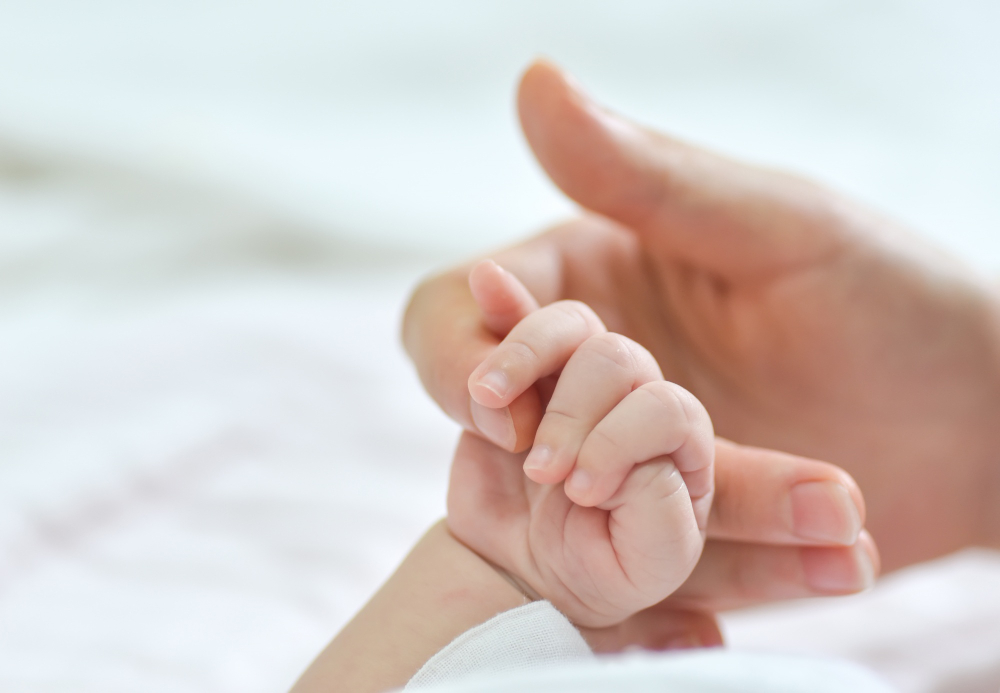
Motherhood has been similarly glorified yet unseen in many ways.
The contributions that hold families together, that quietly regulate the nervous systems of developing children, that absorb emotional chaos so cognition can remain intact: these have been categorised, for the most part, as secondary. As support work. As love rather than labour. As care rather than architecture.
What follows is an attempt to name what that architecture actually is, and why the science that describes it matters, not just for mothers, but for every field that claims to care about human development.
The Invisible Infrastructure of the Brain and the Family
The parallel between glial biology and maternal function is one I arrived at not from a textbook but from something closer to recognition. Sitting with the neuroscience on one side and years of clinical work with mothers on the other, the structural resemblance became difficult to ignore.
Glial cells maintain homeostasis within the neural environment. They detect changes before disruption becomes damage. They buffer excess, repair rupture, regulate the chemical and metabolic conditions within which neurons can fire coherently. They are not celebrated because they do not produce the output. Infact, without them, there is no output.
Contemporary neuroscience has confirmed what was long suspected: glial cells are deeply involved in synaptic plasticity, neural repair, learning consolidation, memory modulation, neurotransmitter regulation, and the formation of neural circuits themselves (Barres, 2008; Fields, 2008). The cells once dismissed as passive are now understood as active architects of the brain’s most sophisticated functions.
In the relational architecture of early human development, mothers often function in precisely this way.
They detect shifts in a child’s state before language has formed around the distress. They buffer overwhelm before it becomes dysregulation. They repair relational ruptures. They maintain the emotional and physiological homeostasis within the family system that allows a child’s developing nervous system to organise itself toward safety rather than threat.
Much like glial cells create the internal conditions within which neurons can function optimally, the consistent presence of an emotionally available caregiver creates the relational conditions within which a child’s brain, sense of self, capacity for trust, and resilience to stress can develop coherently.
What the Nervous System Learns Before Language
The human nervous system is, at its core, a relationship-based system.
This is among the most significant reframings in contemporary developmental neuroscience. Emotional regulation, attachment security, stress resilience, social cognition, and the developing child’s sense of self are not primarily the product of instruction, praise, or deliberate parenting strategies. They emerge from the accumulated relational experience of co-regulation, the repeated process by which a calmer, more organised nervous system helps a less organised one move through states of distress and return to a window of tolerance (Porges, 2011; Schore, 2001).
A child’s confidence is rarely built by praise alone. It builds because someone repeatedly regulated fear before the child could regulate it independently. A child’s capacity to think clearly under pressure develops because someone consistently absorbed emotional chaos without abandoning them in it. A child’s nervous system learns safety because someone created predictable rhythms of food, touch, sleep, comfort, repair, and presence over years.
This is what developmental psychology describes as the “safe haven” and “secure base” functions of attachment: the caregiver becomes both the refuge to which a child returns during distress and the stable ground from which they confidently explore the world (Bowlby, 1969; Ainsworth et al., 1978). The child develops a lived experience of this as the ordinary texture of their days.
And the research on what sustained co-regulation produces neurobiologically is now substantial. Secure attachment shapes the development of the prefrontal cortex, the stress regulation systems of the hypothalamic-pituitary-adrenal axis, the social engagement circuits of the autonomic nervous system, and the right hemisphere’s capacity for emotional attunement (Schore, 2001; Gunnar & Hostinar, 2015). A securely attached child is not simply emotionally loved in some abstract sense. Their biology is shaped by the quality of the relational environment surrounding them during the most sensitive windows of development.
The Reorganised Brain of a Mother
Motherhood begins long before the first conversation, the first lesson, or the first deliberately considered parenting choice.
It begins in pregnancy, in the physiological reorganisation that prepares a woman’s brain and body to sustain another life. Research now demonstrates that pregnancy and the early caregiving period produce measurable structural and functional changes in the maternal brain, particularly in regions associated with emotional attunement, threat vigilance, empathic responsiveness, and caregiving motivation (Feldman, 2015). These are changes observable on neuroimaging. A mother is not merely performing a set of tasks. Her nervous system, endocrine system, and cognitive orientation are being rewired around protecting and attuning to another person.
Sometimes birth unfolds gently and predictably. Sometimes it unfolds through fear, emergency decisions, operating theatres, haemorrhage, and recoveries a woman never anticipated for herself. Many women enter birth carrying carefully imagined plans and encounter, instead, the profound disorientation of discovering that birth has its own authority. What motherhood teaches quickly is that love is larger than ideology, and that survival itself, the baby’s and her own, becomes the only measure that matters in those moments.
The Complexity of Nourishment
Feeding is where many women first encounter the gap between the idealised narrative of motherhood and the physical reality of it.
There is the painful latch, the cracked and bleeding skin, the engorgement, the relentless sleep deprivation of waking every hour while the rest of the household sleeps. There are tears in the dark that have no audience, alongside self-doubt, confusion, and the kind of fierce determination that does not make headlines because it happens quietly, in the middle of the night, in nursing chairs and kitchen corners.
Contemporary discourse around infant feeding has a tendency to reduce enormously complex experiences into simplified ideological positions: breastfeeding versus formula, direct nursing versus pumping, natural birth versus Caesarean section. Real motherhood rarely moves through life in these binaries. Women move through combinations of all these experiences while trying to keep a baby safe, nourished, and alive.
Research consistently demonstrates that breastfeeding difficulties are strongly associated with maternal anxiety, emotional distress, and diminished self-efficacy, particularly when women feel unsupported or isolated in their struggles (Brown & Harries, 2019). A mother may find herself learning sterilisation protocols at midnight, navigating donor milk, NICU care, supplementation regimes, and feeding systems she never anticipated needing. Her love was never meant to be measured by method. It is revealed through the persistence of her showing up, again and again, in conditions she did not choose.
The Encoding Power of Ordinary Days
Motherhood weaves itself into the ordinary mundane moments that become deeply encoded into a child’s nervous system over time.
The burping cloth that never seems to leave her shoulder. The memorised catalogue of every cry, differentiated long before language exists to name them. The half-asleep rocking at 3am. The familiar smell of milk that lingers on her clothes throughout the day. The sterilised bottles at midnight, the school tiffin prepared before sunrise, the missing socks found during a rushed morning, the waiting outside tuition classes, the sitting awake beside a feverish child while everyone else in the home sleeps.
None of these moments appear significant in isolation. Collectively, they form the relational architecture within which a child’s sense of safety is built.
When a mother stays back during the first days of school so her child feels safe enough to explore, she is helping organise the child’s nervous system around trust. When she welcomes her child’s friends with warmth and food, she is shaping the emotional atmosphere surrounding belonging. When she cleans and prepares the room of a teenager who insists on privacy, she understands, perhaps instinctively, that spaces carry emotional memory and nervous system association. The gesture communicates what words sometimes cannot: you are still held here.
Over years, a mother becomes the keeper of a family’s rhythms. She holds birthdays, medicines, allergies, friendships, fears, heartbreaks, sensitivities, and subtle behavioural changes that others in the system may entirely overlook. She adjusts her life around growth spurts, school schedules, illnesses, examinations, emotional crises, career confusion, marriages, and eventually grandchildren. The administrative and emotional load of this holding is rarely quantified because it is rarely even made visible.
When Children Leave for the World
Then come the adolescent years, and with them, the particular challenge of loving someone who is actively separating from you.
There are friendship fractures that feel catastrophic to a teenager. Betrayals that shake their sense of worth. Heartbreaks that are physically felt. Identity confusion that has no clean resolution. And in many of these moments, children find their way back to their mothers, sometimes without understanding why, sometimes in ways that look more like withdrawal than approach. The nervous system, when under sufficient stress, searches for the earliest source of co-regulation. It searches for the presence that once transformed fear into safety before words existed.
Attachment research is consistent on this point: securely attached children use caregivers as both a secure base from which to explore and a safe haven to which they return during distress (Ainsworth et al., 1978). The adolescent who appears to need nothing from their mother is frequently using her continued, non-reactive presence as the regulatory scaffold beneath their independence.
I am writing this at a moment in my own life when I stand at the cusp of this transition, watching a child who is ready to leave home for university in a distant country. I feel the emotional weight of that, and simultaneously something else: the deep sense that this is what preparation looks like. That the years of co-regulation, of presence, of holding values together as a family, were far more than just dependence. They were about building the interior architecture that a child can now carry into the world.
There is grief in it. There is also a particular kind of quiet dignity.
What the Qurʼan Names with Precision
“His mother carried him in hardship upon hardship, and his/her weaning is in two years. Be grateful to Me and to your parents.” (Qurʼan 31:14)
What is remarkable about this verse is its specificity. hardship upon hardship. The Qurʼan does not romanticise the maternal condition. It acknowledges it. The language of layered vulnerability is not incidental. It names the physiological and emotional reality of gestation, birth, and the extended embodied labour of early caregiving. And it situates gratitude for that experience in the same breath as gratitude toward the Divine while our final direction is towards the Divine.
When the Prophet Muhammad (Peace & Blessing be on him) was asked who deserved the best companionship, he named the mother three consecutive times before mentioning the father (Sahih al-Bukhari 5971; Sahih Muslim 2548). In a tradition that anchors all ranking to Divine wisdom, repetition is never accidental. The elevation was not sentimental. It was a structural recognition of a reality that contemporary neuroscience is only now articulating in the language of glia, co-regulation, and developmental biology.
A mother is not divine. She is fully human, which means she is also exhausted, stretched, reactive at times, and imperfect in ways she carries quietly. She deserves acknowledgment of her limitations alongside recognition of the invisible labour she sustains. And yet through her, many children first encounter what the Qurʼan names as Rahmah: mercy, compassion, the quality of care that creates the conditions for growth. She becomes the first earthly vessel through which that quality reaches a child.
Why the Ordinary Moments Are the Architecture
Generations are not primarily built through milestones and achievements. They are built through repeated moments of presence, regulation, repair, and care. Through someone who consistently shows up. Through someone who stays. Through someone who remembers. Through someone who quietly holds life together while the world rarely notices.
What neuroscience now calls glial function, the active maintenance of the conditions within which higher functioning becomes possible, is what many mothers have been doing inside ordinary days for as long as there have been children who needed to develop.
To every mother navigating the early fog of feeding and sleeplessness: your persistence is building a nervous system. To every mother holding a teenager who appears to need nothing from you: your continued presence is the regulatory scaffold beneath their independence. To every mother who has stood, as I am standing, at the threshold of watching a child you prepared for the world finally step into it: the architecture you built will travel with them.
And to the society that has reduced all of this to “just caregiving”: the science is clear. The caregiving environment is not peripheral to human development. It is developmental biology itself.
Happy Mother’s Day to the women whose ordinary moments became the invisible foundation of generations.
References
- Feldman, R. (2015). The adaptive human parental brain: Implications for children’s social development. Trends in Neurosciences, 38(6), 387–399. https://pmc.ncbi.nlm.nih.gov/articles/PMC4739659/
- Bowlby, J. (1969). Attachment and Loss: Volume 1. Attachment. Basic Books.
- Ainsworth, M.D.S., Blehar, M.C., Waters, E., & Wall, S. (1978). Patterns of Attachment: A Psychological Study of the Strange Situation. Lawrence Erlbaum Associates.
- Porges, S.W. (2011). The Polyvagal Theory: Neurophysiological Foundations of Emotions, Attachment, Communication, and Self-Regulation. W.W. Norton & Company.
- Brown, A., & Harries, V. (2019). Infant feeding and maternal mental health: The role of stress, anxiety and maternal confidence. Maternal & Child Nutrition, 15(4). https://pubmed.ncbi.nlm.nih.gov/31206700/
- Barres, B.A. (2008). The mystery and magic of glia: A perspective on their roles in health and disease. Neuron, 60(3), 430–440. https://pmc.ncbi.nlm.nih.gov/articles/PMC2902673/
- Fields, R.D. (2008). White matter in learning, cognition and psychiatric disorders. Trends in Neurosciences, 31(7), 361–370.
- Fields, R.D. (2009). The Other Brain: From Dementia to Schizophrenia, How New Discoveries About the Brain Are Revolutionizing Medicine and Science. Simon & Schuster.
- Gunnar, M.R., & Hostinar, C.E. (2015). The social buffering of the hypothalamic-pituitary-adrenocortical axis in humans: Developmental and experiential determinants. Social Neuroscience, 10(5), 479–488.
- Schore, A.N. (2001). Effects of a secure attachment relationship on right brain development, affect regulation, and infant mental health. Infant Mental Health Journal, 22(1–2), 7–66.
- Qurʼan, Surah Luqman 31:14.
- Qurʼan, Surah Al-Ahqaf 46:15.
- Sahih al-Bukhari 5971. https://sunnah.com/bukhari:5971
- Sahih Muslim 2548. https://sunnah.com/muslim:2548